


Key Takeaways
- Dry eye can feel gritty and burning, and it can also make your eyes water.
- Low tear production and tears drying too fast are the two main forms of dry eye.
- Blocked oil glands in the eyelids are a common reason why tears evaporate too quickly.
- Age, hormones, health conditions, some medications, and contact lens wear all play a role.
- Long screen hours, office vents, and windy commutes can make symptoms worse.
- An eye exam can pinpoint the reason so treatment fits your eyes.
Dry Eye Is Tied to Your Tear Film
Dry eye happens when your eyes don’t make enough tears, or when the tears that you do make dry up too quickly. The latter form of the condition often occurs when the oil glands in your eyelids become blocked. A dry eye consult with our team at Lunettes Optometric can sort out the causes of your symptoms and give us the data we need to recommend treatments.
What Dry Eye Feels Like
Dry eye often shows up as discomfort that you try to work around. Here are some signs worth paying attention to:
- Burning, stinging, or a gritty feeling like sand under the lid
- Watery eyes, especially outdoors (while counterintuitive, this is your body’s attempt to fight dryness)
- Blurred vision while reading or scrolling
- Redness and sensitivity to bright light
- Contact lenses that feel fine in the morning and rough by lunch
What Gets Mistaken for Dry Eye
Allergies, eyelid inflammation, and plain screen fatigue all have symptoms that resemble dry eye. Treating the wrong condition can leave you buying drops for months without ever resolving the underlying issue.
The Main Causes of Dry Eye
Dry eye disease falls into two broad patterns. In one form, your eyes simply don’t produce enough tears. In the other, your tears evaporate too quickly.
Meibomian Gland Dysfunction
The meibomian glands are small, oil-producing glands along your eyelids. Meibomian gland dysfunction (MGD) happens when those glands become blocked, preventing the flow of oil to your tears. Your tears require oils to avoid drying out too quickly, so MGD is a common cause of dryness.
Age, Hormones, and Health Conditions
Tear production tends to drop as you get older. Hormonal shifts, including menopause, can change things too. Certain health conditions are also linked to dry eye, including thyroid disease, rheumatoid arthritis, and Sjögren’s syndrome.
Medications & Contact Lenses
Some everyday prescriptions can contribute to dry eye, including antihistamines, blood pressure medications, and antidepressants. Long-term contact lens wear can also be a factor, as can prior laser surgery.
Screen Time & Dry Eye
Focusing on a screen reduces your blink rate. Less blinking means less refreshing of your tear film across the surface of your eyes. Over the course of a day, this can cause dryness.
Office environments usually only make things worse, as air conditioning and ceiling fans pull moisture out of the air. Even when you go outside, windy days and smoke or dust in the air can make symptoms worse.
Desk Habits to Adjust
Small adjustments to your habits can reduce how often flare-ups hit:
- Step away from your screen regularly and blink a few times
- Shift your chair or monitor out of direct vent airflow
- Run a small humidifier at your desk or at home overnight
Home Treatment Options
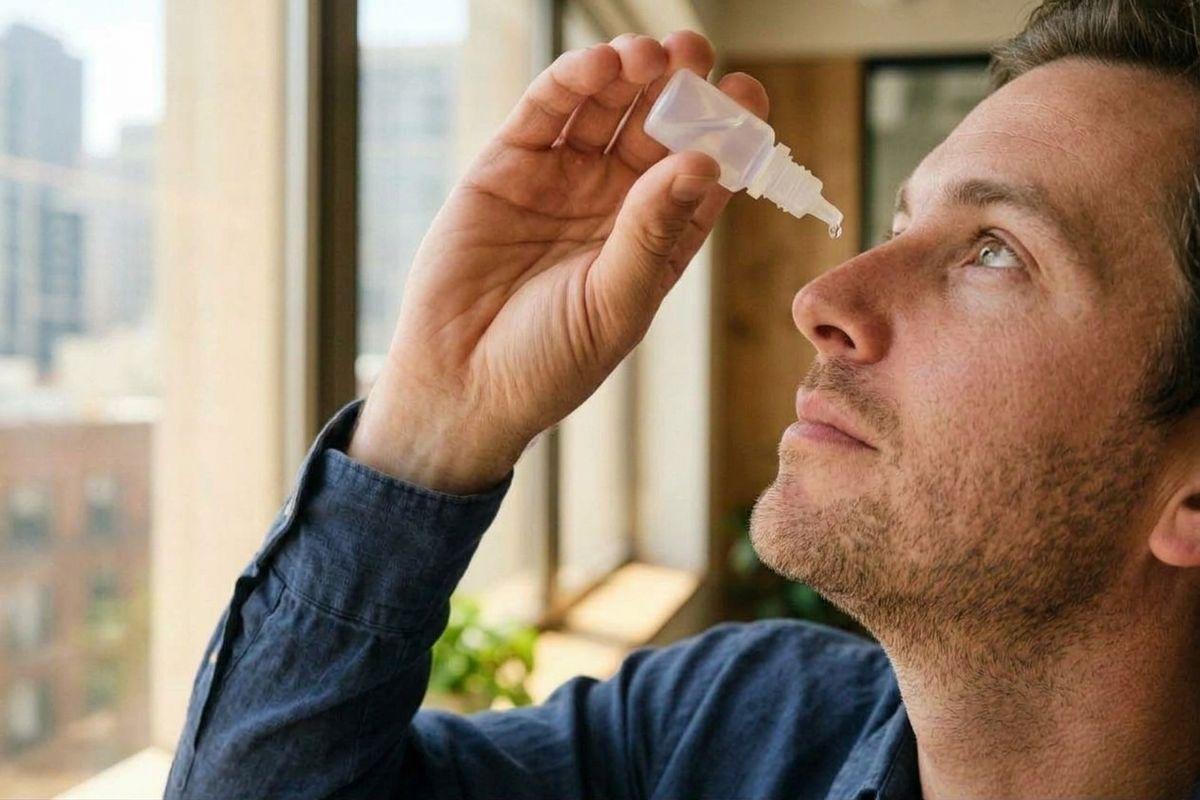
Lubricating artificial tears help many people with symptoms. Make sure to use preservative-free versions if you’re applying drops more than a couple of times per day.
Warm compresses and gentle eyelid cleaning can support the oil glands, while foods rich in omega-3 fats or other supplements can support your general eye health.
How an Optometrist in San Francisco Identifies the Cause
If symptoms persist, we can perform an eye exam that looks at your eyelids, the surface of your eye, and your blink pattern. We’ll also test your tear production and how long your tears take to evaporate. A review of your medications and health history fills in the rest of the picture.
Bringing a few things along will make your appointment faster:
- A list of your current medications and supplements
- A rough timeline of when symptoms started and when they peak
- The drops you’ve already tried, including the bottles if you have them
- Any previous prescription treatments for dry eye
In-Office Care from the Team
When eye drops aren’t enough, we may suggest professional treatments. Depending on the cause of your symptoms, these might include ointments, punctal plugs, intense pulsed light (IPL) therapy, and radiofrequency (RF).
Weekday appointments at Lunettes Optometric fit easily around a downtown workday. Book a dry eye consult and find out what’s behind your symptoms, then talk with an optometrist in San Francisco about the plan that fits your eyes and your screen time.

